That Thing You Do: Clarifying Terms Like Graphic Facilitation, Graphic Recording, and More

“What’s the name of what you do again?”
We get this question all the time, and we’re used to explaining what we do with markers on the wall.
Bringing meetings and events to life through drawing is truly in a category of its own, and it can be difficult to put into words.
There are various terms used in our field to describe similar concepts. The International Forum of Visual Practitioners (IFVP) is the professional credentialing body of our profession; therefore, you can consider us “visual practitioners”—individuals who incorporate visuals into the work of meetings and collaboration.
The term we use most often is visual notetaking because we think it best represents the work we do in a way most people can conceptualize.
We take notes, visually. We listen, capture notes live, and incorporate icons, color, and other visual elements to highlight key information and help participants remember their experience. One of the best books for learning this craft is The Art of Visual Notetaking by Emily Mills, which we reference in our workshops.
Most people in our industry do not use this term, so it’s worth going through a few other terms you may encounter.
Graphic Facilitation and Graphic Recording

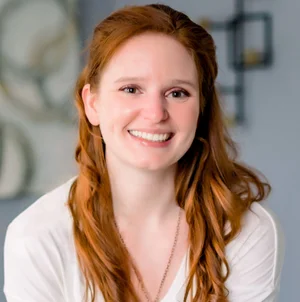
DWM Associates Renatta Algalarrondo and Lauren Green
We can look to our hunter-gatherer ancestors for the earliest use of visuals for communication. Before we had written language, we recorded our stories with images on cave walls. In ancient Egypt, sacred scribes recorded eons of history in hieroglyphs. With this history in mind, it’s no wonder that many in our field use the word “scribe” to describe the work they do.
What we call visual notetaking began in the 1970s. David Sibbet and Geoff Ball observed how architects, engineers, and educators used visuals in meetings and lessons, and began codifying a system of visual aids to support strategic planning and other meetings. Because Sibbet and his early pupils were often meeting leaders and facilitators, the term initially used to describe the use of live visuals in meetings was “graphic facilitation.”
Today, there is considerable industry debate over the term graphic facilitation. As illustrators entered the field over time, they brought with them a higher level of artistry. Training in graphic facilitation became centered around the ability to draw well rather than the “group process” component originally conceptualized by Sibbet and colleagues. This led to the creation of the term “graphic recording,” which is more widely used today because it better captures the role of a silent listener who does not actively guide the meeting.
Art or Not Art
The introduction of illustrators into the field significantly elevated the aesthetic of meeting visuals. Conference audiences love to see the words they hear in talks brought to life in a beautiful way. However, the beauty produced through visual notetaking is different from what we commonly refer to as art.
Are we artists? Yes, and no. There is artistry in our work, absolutely. We are making both informed and intuitive choices about what to capture and how to present it visually. Like artists of all types, our own interpretations and biases influence the work we produce.
However, we are not in the room to create something of our own creation. Instead, we are intentionally capturing what we hear to best suit the needs.
If you’re looking to hire someone in our field, you will find a range of artistic abilities. Ask yourself: Is it more important to have a beautiful picture or to have content captured? Most notetakers can do both, but may have a strength in illustration or synthesis. You can often identify someone’s strengths by closely reviewing examples of their work, which helps ensure their style and abilities align with the goals of your session.
Sketchnoting and Digital Scribing
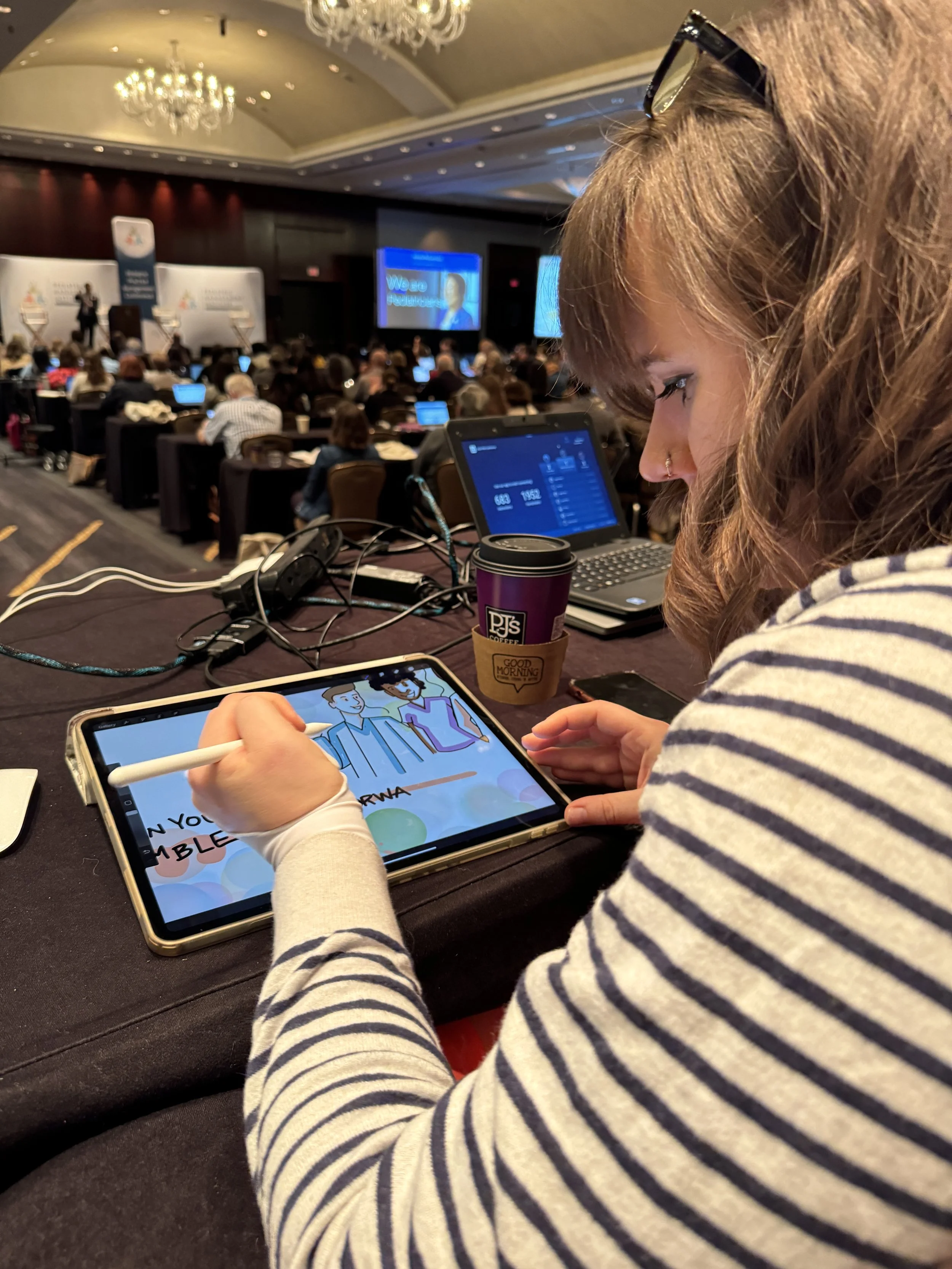
DWM Associate Sara Nuttle
The fun of figuring out what to call us doesn’t stop at graphic recorders or graphic facilitators. Mike Rohde popularized the term “sketchnoting” with The Sketchnote Handbook. When we use the term “sketchnoting,” we refer to taking visual notes on a small scale, such as in a notebook or another lap-sized format.
Modern drawing applications enable users to create sketchnotes digitally on an iPad or tablet, a practice often referred to as “digital scribing.” These applications allow notetakers to more easily incorporate textures, images, and other visual components, as well as add interactive elements and links not possible using markers and paper, expanding the possibilities of visual notes.
What to Take Away
Whatever term you use—visual notetaker, graphic facilitator, graphic recorder, visual practitioner, scribe, digital scribe, sketchnoter, artist, or the “person who draws on the wall”—the core of this work is the same: We help people see what they mean.
Visuals make thinking tangible, create shared understanding, and turn complex dialogue into something teams can point to, remember, and act on. Regardless of their title, behind the markers, tablets, and taped-up paper is someone committed to helping your group do its best thinking, together.
Quick Terms Glossary
Visual Practitioner
A professional who uses visuals to support collaboration, communication, and group process. Umbrella term for the whole field.
Visual Notetaking
Our preferred term. Real-time note capture using words and imagery to help people understand and remember key ideas.
Graphic Facilitation
The original 1970s term. Refers to facilitators who use visual processes, worksheets, and templates to actively guide the group process.
Graphic Recording
Live visual capture in meetings or events by someone who listens and draws, but does not facilitate the conversation.
Scribe / Visual Scribe
A nod to the ancient role of documenting stories, knowledge, or discussions through symbolic or visual language.
Sketchnoting
Small-scale visual notes, often created in a notebook, sketchpad, or tablet.
Digital Scribing
Visual notetaking done on an iPad or tablet using digital drawing apps.
Illustration
Artwork created for aesthetic or conceptual purposes.
Need a notetaker for your next event?
Visit our contact page to get started and learn how we can visually transform your meeting or event.
As an Amazon Associate, we earn from qualifying purchases.
You might also like…